Scuba Diving in UK & Cold Water
Rugged, historic, and biologically rich. The UK offers some of the world's finest temperate diving: friendly grey seals in the Farne Islands, the sunken German WWI battlefleet in Scapa Flow, and iconic South Coast wrecks.
The Raw Truth About Diving in the United Kingdom
UK diving is often dismissed by holiday divers as cold and murky. That reputation is deeply undeserved.
When you learn to dive in British waters, you gain skills in buoyancy, compass navigation, and thermal management that make tropical diving feel effortless. From the curious juvenile Atlantic grey seals of the Farne Islands to the colossal German WWI High Seas Fleet in Scapa Flow, the UK offers encounters you cannot replicate anywhere else on Earth.
The Thermal & Environmental Reality:
- The Drysuit Mandate: Surface water temperatures reach 14–16°C in August and September, but drop to 6–8°C in early spring. While summer shore dives (such as Swanage Pier) can be completed in a 7mm semi-dry wetsuit, serious UK diving is drysuit territory. A membrane or crushed neoprene drysuit paired with a 200g–300g thermal Thinsulate undersuit, dry gloves or 5mm wet gloves, and a 5mm–7mm hood will keep you warm through 60-minute dives.
- Tides & The “Slack Water” Window: Coastal sea dives on the English Channel or North Sea are governed by the Admiralty Tide Tables. On offshore shipwrecks like the M2 Submarine or SS Kyarra, currents at mid-tide run at 3 to 4 knots. Boats must drop divers strictly during the 30-to-45 minute slack water window between incoming and outgoing tides.
The Farne Islands: The UK’s Signature Marine Encounter
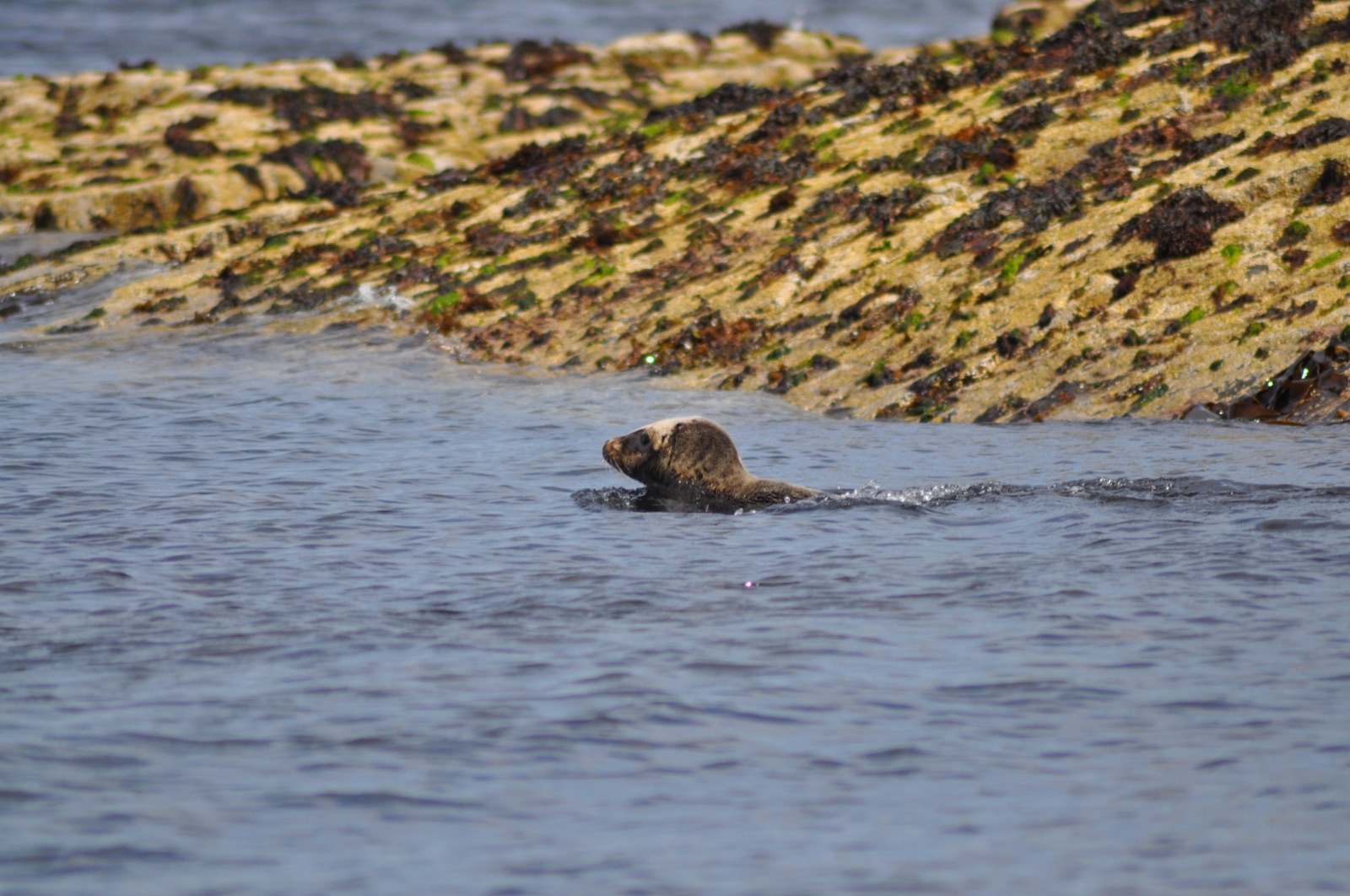
Located off the coast of Northumberland in northeastern England, the Farne Islands are home to over 5,000 Atlantic grey seals (Halichoerus grypus):
- The Interaction: Between September and November, thousands of newly weaned juvenile pups enter the shallow kelp shallows. They are intensely curious and completely fearless. Pups will swim directly up to divers, nibble playfully on fin tips, tug on drysuit exhaust valves, and gaze directly into your mask with saucer-like black eyes.
- Topography: Dives are shallow (typically 6–12m), sheltered inside volcanic dolerite gullies filled with lush golden laminaria kelp forests. It is an accessible, awe-inspiring experience for any diver with basic cold-water comfort.
Scapa Flow: The Holy Grail of Wreck Diving
In June 1919, Rear Admiral Ludwig von Reuter scuttled the entire interned German Imperial Navy fleet of 74 warships in Scapa Flow, Orkney:
- The Ships Today: Seven massive steel warships remain on the seabed, including three 26,000-tonne K\u00f6nig-class battleships (SMS Markgraf, SMS Kronprinz Wilhelm, SMS K\u00f6nig) and four light cruisers (SMS C\u00f6ln, SMS Dresden, SMS Karlsruhe, SMS Brummer).
- Depth & Certification: These wrecks lie between 24m and 45m in cold, green, 10°C northern waters. They are massive: cruising past the 12-inch twin gun turrets of the Markgraf feels like flying past an underwater fortress. Advanced Open Water + Drysuit + Deep Specialty + Nitrox is the minimum baseline to dive the fleet safely.
Independent Local Charter Boats & Dive Centres in the UK
How2Scuba operates with 100% editorial independence. When booking UK diving, contact these respected local charter skippers and operators directly:
- Farne Diving Services / Sovereign Diving (Seahouses): The premier hard-boat dive charters operating out of Seahouses Harbour to the Farne Islands seal colonies, equipped with divers’ lifts and heated wheelhouses.
- Swanage Boat Charters (Dorset): Operating daily dive shuttles to South Coast wrecks (Kyarra, Carentan) alongside easy walk-in access for Swanage Pier shore divers.
- The Halton / Radiant Queen / Sunrise (Scapa Flow, Stromness): Renowned liveaboard and hard-boat day charters dedicated exclusively to the German High Seas Fleet, equipped with diver lifts and nitrox/trimix blending facilities.
- Vobster Quay (Somerset) & Stoney Cove (Leicestershire): Inland training lakes offering year-round sheltered conditions, heated changing facilities, dive shops, and tank testing stations.
Questions to Ask When Contacting a UK Charter Skipper:
- Is the charter boat fitted with a hydraulic stern diver lift or an open-water dive ladder?
- What are the designated ropes-off and slack water times for the day’s wrecks?
- Are cylinder fills (air or 32% Nitrox) available on-site at the harbour or should I arrive with filled twinsets?
Practical Trip Planning for UK Diving
- Driving is King: Almost all UK coastal dive locations require a car to transport heavy dive kit, lead weights, and drysuits.
- Weather Contingency: Always call the charter skipper the evening before your scheduled dive (usually at 18:00 PM) for the official weather check. If Atlantic or North Sea gale warnings blow out a boat trip, inland quarries (such as Vobster Quay or Stoney Cove) provide a guaranteed, sheltered backup for the weekend.
Authoritative Sources & Maritime Records
Information on depths, marine protection, species, and historical data for UK & Cold Water has been verified against official registries and scientific archives: