Scuba Diving in Cairns & Great Barrier Reef
The official gateway to the world's largest coral reef system. Skip crowded inner day-boats: choose dedicated 3-day outer reef liveaboards or Coral Sea expeditions to experience 40m visibility and giant potato cod.
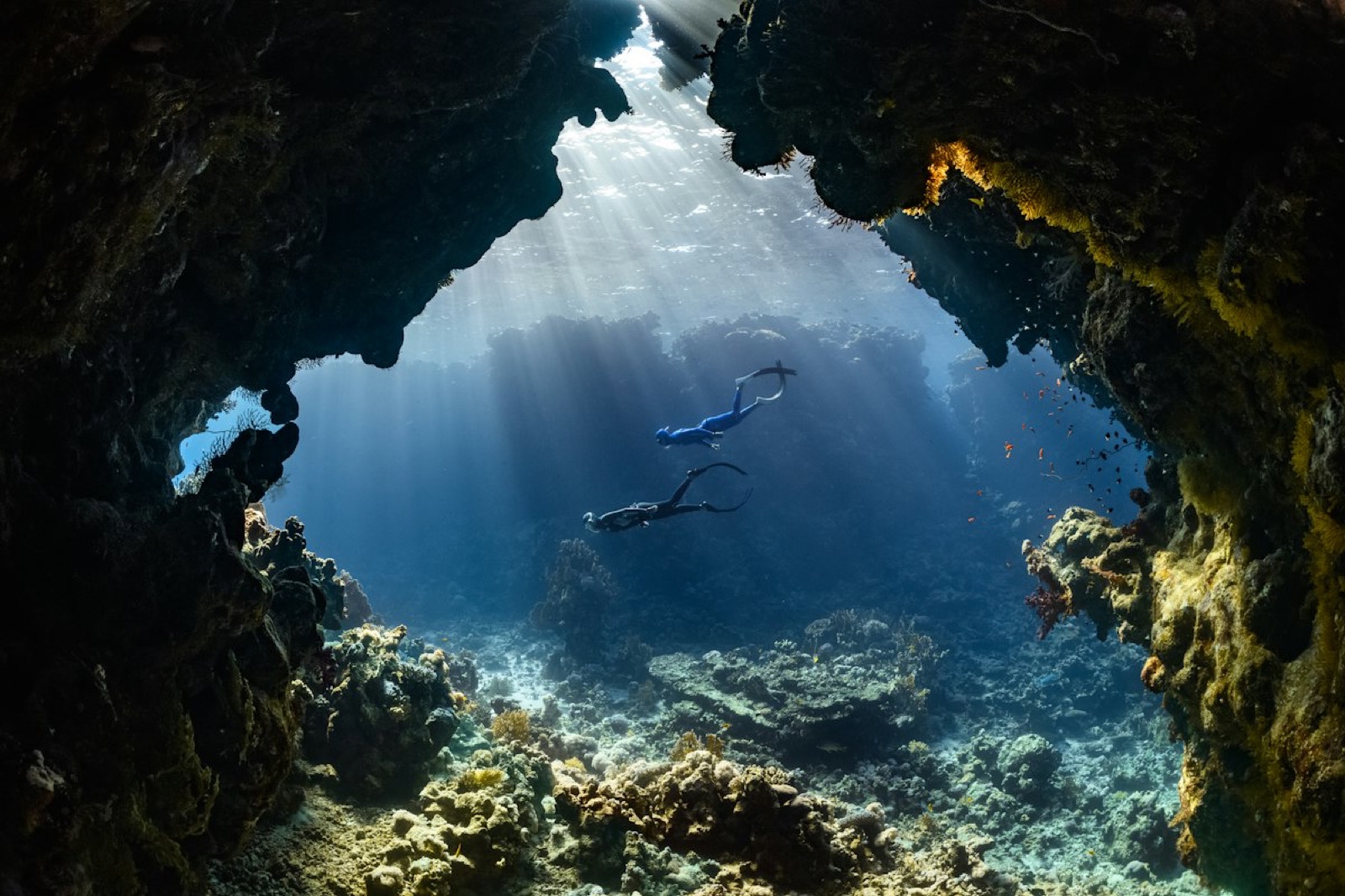
The Raw Truth: Day-Boats vs. Outer Reef Liveaboards
The Great Barrier Reef spans over 2,300 kilometres along the Queensland coast. Cairns is its commercial epicenter.
However, thousands of international divers leave Cairns disappointed because they book the wrong trip:
- The Mass Day-Boat Trap: Large, 150-to-250 passenger catamaran day-boats departing from the Cairns Marlin Marina typically visit inner and middle reef pontoons (such as Moore or Hastings Reef). It is a bumpy, 90-minute open-ocean crossing (seasickness is common), water visibility averages 10–18m, and you share the water with hundreds of day snorkelers.
- The Liveaboard Gold Standard: To experience the true, pristine Great Barrier Reef, you must get further offshore. 3-day/2-night liveaboards (such as Pro Dive Cairns) head to the protected Outer Reefs (Flynn, Milln, Thetford), offering 11 dives including night dives with sleeping turtles and hunting sharks. For world-class 35m+ visibility, multi-day expeditions (Mike Ball, Spirit of Freedom) travel north to the legendary Ribbon Reefs and Osprey Reef in the Coral Sea.
The Signature Encounters: Cod Hole & Steve’s Bommie
The northern Ribbon Reefs feature two of the most celebrated dive sites on the planet:
1. The Cod Hole (Ribbon Reef #10)
- Topography: A sandy channel lying at 15m depth along the northern edge of Ribbon Reef #10.
- The Encounter: Home to a resident colony of colossal Potato Cod (Epinephelus tukula). These gentle 100kg to 150kg giant groupers have been habituated to non-threatening divers for over three decades. They will swim straight up to you, hover at eye level, and allow you to inspect their massive gills and spotted patterning up close.
2. Steve’s Bommie (Ribbon Reef #3)
- Topography: A solitary coral spire rising dramatically from a 30m sandy seabed to within 5m of the surface.
- Biodiversity: An absolute macro and pelagic vortex. Flame file shells (Limaria fragilis) flicker with electric-like mantle flashes inside crevices, while nudibranchs, stonefish, ghost pipefish, and schooling yellowtail barracuda circle the spire.
Seasonality, Marine Stingers & The Dwarf Minke Phenomenon
- Marine Stinger Season (November to May): During the Australian summer, dangerous box jellyfish (Chironex fleckeri) and Irukandji jellyfish inhabit coastal Queensland waters. While offshore outer reefs have minimal stinger risk, wearing a full-body Lycra stinger suit is mandatory on all dive charters for thermal comfort, sun defense, and sting protection.
- Dwarf Minke Whale Season (June and July): The Ribbon Reefs are the only place on Earth where travelers can participate in swimming with wild Dwarf Minke Whales (Balaenoptera acutorostrata). Whales approach the liveaboard’s drift lines voluntarily, making eye contact with snorkelers in clear open water.
Independent Local Dive Operators in Cairns
How2Scuba maintains strict commercial independence and takes no affiliate kickbacks. Contact these premier licensed GBRMPA operators directly:
- Pro Dive Cairns: The gold standard for entry-level and continuing education liveaboards. Operates three custom 24-metre purpose-built dive vessels (Scubapro I, II, III) running 3-day/2-night trips to Flynn and Milln reefs with maximum 32 passengers.
- Mike Ball Dive Expeditions (Spoilsport): Australia’s premier luxury liveaboard catamaran, running 3, 4, and 7-night expeditions to the northern Ribbon Reefs, Cod Hole, and the remote Coral Sea (Osprey Reef shark feeds).
- Spirit of Freedom: High-end 37-metre luxury liveaboard cruiser operating world-class diving expeditions through the Ribbon Reefs and deep Coral Sea oceanic walls.
- Divers Den (Cairns): Established operator running both daily outer reef day-boat catamarans (AquaQuest) and an overnight floating liveaboard vessel (Ocean Quest).
Questions to Ask Before Booking a GBR Charter:
- Is the trip a day-boat or multi-day liveaboard?
- Which specific outer reef moorings (Flynn, Milln, Ribbon Reefs) are on the vessel’s itinerary?
- Is the mandatory Great Barrier Reef Marine Park Environmental Management Charge (EMC) included in the quoted price?
- Are full-body stinger suits and dive computers included in equipment rental?
Practical Trip Planning for Cairns
- Airport Transit: Cairns Airport (CNS) is located just 10 minutes from the city center and Marlin Marina, with regular domestic flights from Sydney, Melbourne, and Brisbane.
- Where to Stay: Base yourself near the Cairns Esplanade or marina precinct for walkable access to charter departures, waterfront cafes, and the public swimming lagoon.
Authoritative Sources & Maritime Records
Information on depths, marine protection, species, and historical data for Cairns & Great Barrier Reef has been verified against official registries and scientific archives: