Scuba Diving in Cozumel
Located off Mexico's Yucatan Peninsula, Cozumel is the planet's premier drift diving arena. Fast oceanic currents sweep you past vertical walls, giant barrel sponges, and underwater caverns with effortless neutral buoyancy.
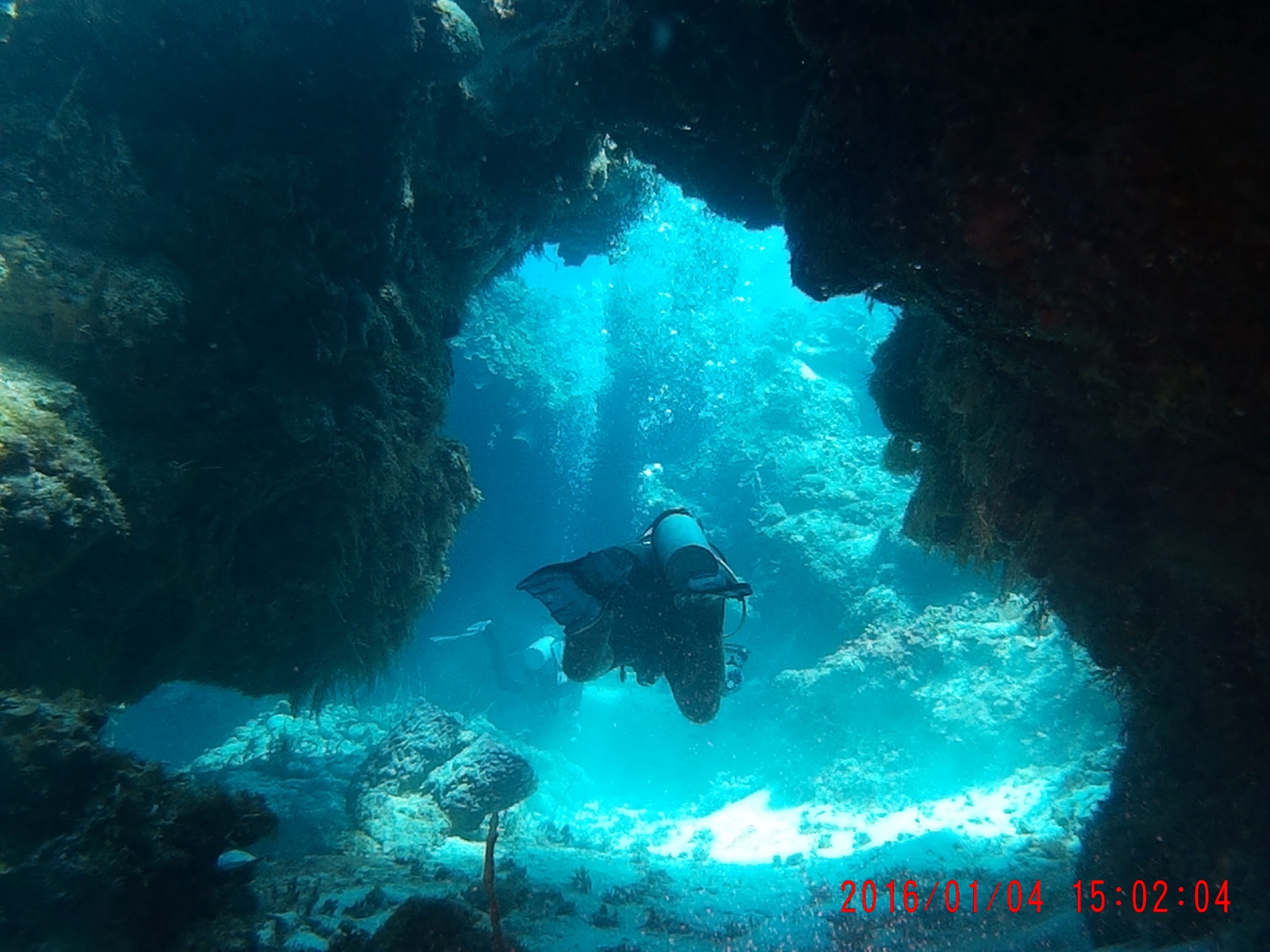
Why Cozumel is the World’s Premier Drift Diving Arena
Cozumel sits directly in the path of the Yucatan Current, a powerful oceanic conveyor belt surging northward between the island and mainland Mexico into the Gulf of Mexico.
Because of this constant hydrographic highway, diving in Cozumel feels like effortless flight. You do not fin forward; you simply drop to your desired depth, establish crisp neutral buoyancy, cross your arms or let them stream at your sides, and let the 1 to 3 knot current glide you past miles of living reef. The boat captain tracks the dive group’s bubbles from the surface and collects you the moment you pop up.
The Unvarnished Operational Realities:
- Negative Water Entries: On fast outer wall dives, dive boats cannot linger on the surface while divers fiddle with masks or inflate BCDs—the current will scatter buddies across half a mile. Crews practice negative entries: you enter the water with an empty BCD, roll backwards simultaneously off the gunwale, kick straight down to the 10-metre reef top, and equalize on the descent.
- The DSMB (Safety Sausage) is Life Insurance: Cozumel channel handles heavy boat traffic—including high-speed passenger ferries, dive pangas, and fishing skiffs. Deploying a Delayed Surface Marker Buoy (DSMB) from your 5-metre safety stop is non-negotiable. Never surface in open water without a bright orange SMB marking your position to boat propellers.
- Strict CONANP Marine Park Regulations: All diving south of the International Pier falls under the Parque Nacional Arrecifes de Cozumel. Diving with gloves is strictly illegal under federal Mexican law to discourage touching the reef. All divers must wear a daily conservation wristband (~$6 USD/day).
Depth Reality & Certification Limits: The “Devil’s Throat” Hazard
Cozumel’s underwater topography is breathtaking, but the sheer drop-offs require unwavering depth discipline:
1. The Santa Rosa & Columbia Drop-Offs
- Topography: The reef top sits at 12–15m, but the wall drops vertically into hundreds of metres of deep oceanic blue.
- The Trap: Because water clarity routinely exceeds 35 metres, depth perception is deceptive. Without a visible seabed to provide spatial reference, divers frequently sink past 30m without noticing.
- Certification Standard: Open Water divers must stay on the upper shelf (max 18m) and avoid swimming over the void. The wall face requires Advanced Open Water (30m) with active dive computer monitoring.
2. Punta Sur & The Devil’s Throat (Garganta del Diablo)
- Topography: A narrow, dark lava-like tunnel entering inside the reef structure at 27m and dropping steeply through the rock before spitting divers out onto a vertical outer wall at 40m (130 ft).
- Certification Standard: Strictly Advanced Open Water + Deep Diver Specialty. Recreational single-tank divers have zero margin for error here: No-Decompression Limits (NDL) on air drop to mere minutes, and nitrogen narcosis is pronounced. Do not attempt this site without high gas reserves (turn at 120 bar) and a reputable local guide.
Endemic Marine Fauna & Species Identification
Cozumel’s isolated insular platform supports distinctive Caribbean species found virtually nowhere else:
- The Splendid Toadfish (Sanopus splendidus): Endemic strictly to Cozumel island. This bizarre, vibrantly patterned fish features royal blue stripes, bright yellow fin margins, and whisker-like barbels, hiding deep inside rubble crevices at Paradise Reef and Palancar.
- Pelagic Gliders: Spotted eagle rays (Aetobatus narinari) fly effortlessly against the current along Santa Rosa Wall between December and April.
- Nurse Sharks (Ginglymostoma cirratum): Resident 2m to 2.5m nurse sharks rest beneath the coral overhangs at Cedral Pass, completely habituated to passing drift divers.
Independent Local Dive Centres in Cozumel
How2Scuba operates with zero commercial kickbacks. When arranging your dives, consider these respected local operations based in San Miguel:
- Aldora Divers: Famous for equipping divers with high-capacity steel 120 cu ft and 100 cu ft cylinders rather than standard aluminum 80s, allowing relaxed 70-to-80 minute drift dives. Small boat groups (max 6 divers).
- Scuba Tony: Boutique operator operating custom fast pangas with maximum 6 divers per boat, departing early to hit premier wall sites before cruise ship day-boats arrive.
- Scuba Club Cozumel: A dedicated Spanish-colonial dive resort located south of San Miguel with a private marina, on-site dive shop, and an outstanding house reef for afternoon shore practice.
- Dressel Divers / Roberta’s Scuba Shack: Established PADI IDC operations offering comprehensive training courses, nitrox blending, and trips to both southern walls and northern wreck sites.
Questions to Ask When Booking a Cozumel Operator:
- Do you use large steel tanks (100 or 120 cu ft) or standard aluminum 80s?
- What is your policy on maximum group size per divemaster in the water?
- Do you depart from the San Miguel marina or a private pier, and at what time in the morning?
- Are nitrox fills included or charged as an extra surcharge?
Practical Logistics: Getting to Cozumel & Where to Stay
- The Cancun vs. Cozumel Airport Route: Flying directly into Cozumel International Airport (CZM) saves hours of transit. However, flying into Cancun Airport (CUN) is often £150–£300 cheaper; from CUN, take the official ADO coach bus to Playa del Carmen (60 mins), walk 5 minutes down Quinta Avenida to the ferry terminal, and board the Ultramar or Winjet passenger ferry (45 mins) straight into San Miguel de Cozumel.
- Where to Stay: Staying in San Miguel de Cozumel gives you access to authentic Mexican taquerias, supermarkets, and pedestrian street life. Staying at a Southern Hotel Mile Resort (like Allegro or Fiesta Americana) puts you closer to the marine park dive sites, shaving 30 minutes off daily boat runs.
Authoritative Sources & Maritime Records
Information on depths, marine protection, species, and historical data for Cozumel has been verified against official registries and scientific archives: