Scuba Diving in Gili Islands
Three tiny coral fringed islands nestled off northwest Lombok. Free from motorized vehicles, the Gilis offer world-famous sea turtle sanctuaries, oceanic seamounts, and exhilarating drift dives fueled by the Indonesian Throughflow.
The Island Character Breakdown: Gili T vs. Gili Air vs. Gili Meno
Lying just off the northwest coast of Lombok, Indonesia, the three Gili Islands (Gili Trawangan, Gili Meno, and Gili Air) form a tranquil, car-free scuba sanctuary.
Motorized transport is banned across all three islands; transport is conducted exclusively on foot, by rented bicycle, or via traditional horse-drawn carts (cidomo). However, each island has a completely distinct personality:
- Gili Trawangan (Gili T): The largest and most developed island. Famous for vibrant nightlife and sunset bars, but also home to the region’s pioneering technical and instructor training facilities. Stay in the south for nightlife; stay in the northwest for peaceful boutique dive resorts.
- Gili Air: The perfect balance. Features a laid-back, bohemian atmosphere, waterfront yoga studios, organic cafes, and premier dive centres with panoramic views of Mount Rinjani rising on mainland Lombok.
- Gili Meno: The quietest, most secluded middle island. Perfect for honeymooners, nature enthusiasts, and divers who want serene silence and immediate access to Turtle Heaven and the Meno Wall.
The Hydrodynamic Reality: The Indonesian Throughflow (ITF)
The Gili Islands sit right on the edge of the Lombok Strait, one of the planet’s major oceanic choke points:
- The Current Conveyor: The Indonesian Throughflow (ITF) channels billions of cubic metres of warm Pacific Ocean water south into the Indian Ocean.
- Drift Diving Dynamics: Outer sites like Shark Point, Deep Turbo, and Halik are classic drift dives. Rather than kicking against currents, dive boats drop groups up-current, and divers drift effortlessly along the slope while the captain tracks bubbles.
- Tidal Discipline: During full moon spring tides, currents at deep seamounts (Deep Turbo) can become powerful. Reputable dive operations always time these outer seamount dives around the slack water window to ensure maximum bottom time and safety.
The Sea Turtle Sanctuary of Southeast Asia
The Gilis are globally famous for their exceptionally dense resident sea turtle population:
- Green Sea Turtles (Chelonia mydas): Flourish in shallow coral gardens and cleaning stations. At Turtle Heaven, it is common to count 15 to 25 mature green turtles on a single dive. They are completely unbothered by divers, calmly grazing on seagrass and coral algae.
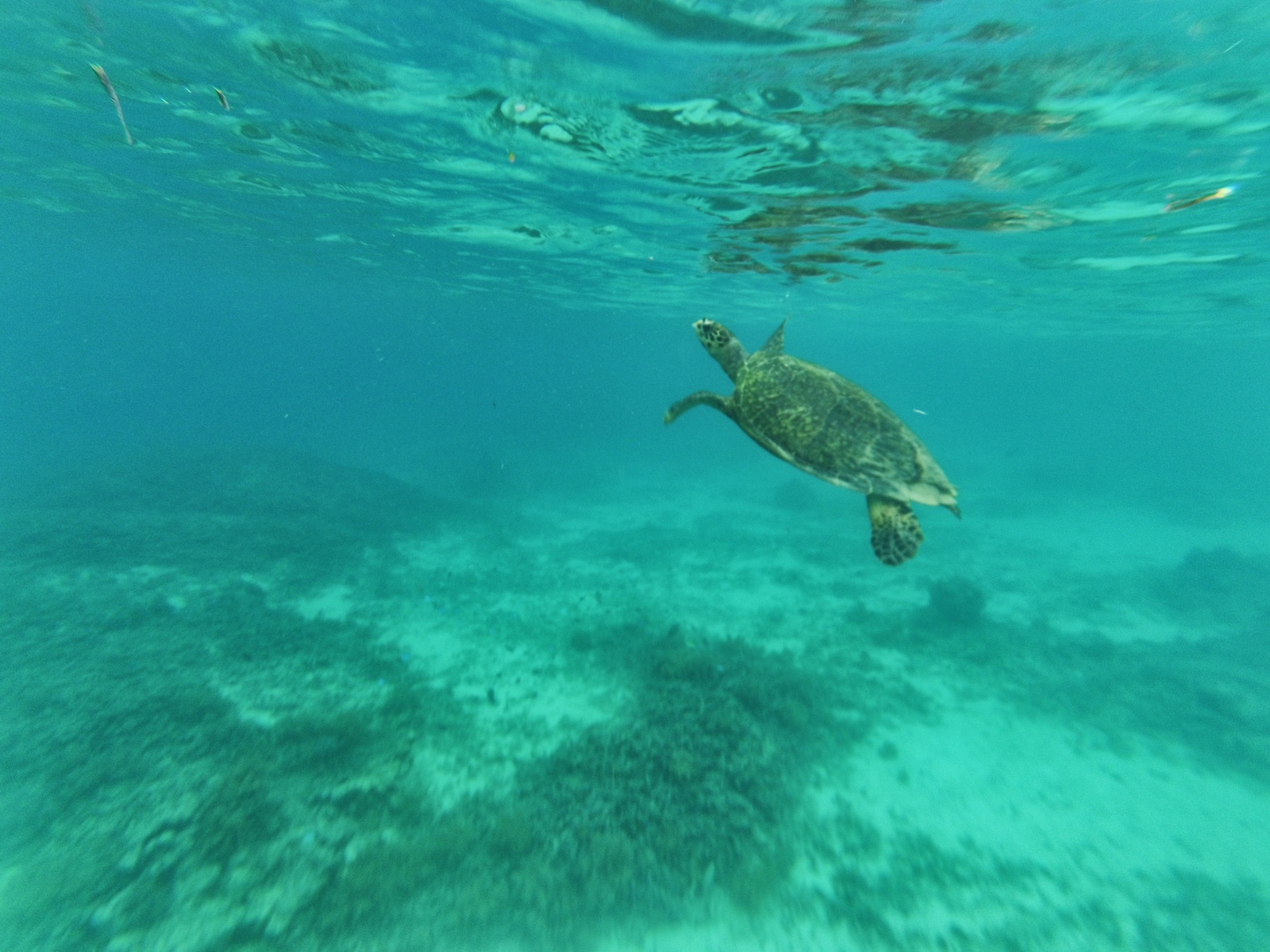
- Hawksbill Turtles (Eretmochelys imbricata): Regularly spotted hunting sponges along the vertical crevices of Meno Wall.
- The Diver Code of Conduct: The Gili Eco Trust strictly enforces a zero-touch policy. Divers must maintain a minimum distance of 2 metres from all turtles and never block a turtle ascending to the surface for air.
Independent Local Dive Centres in the Gilis
How2Scuba operates with 100% commercial independence and zero booking markups. Contact these licensed local dive resorts directly:
- Blue Marlin Dive (Gili Trawangan & Gili Air): The original pioneer of Gili diving, founded in 1990. PADI 5-Star Career Development Centre (CDC) with a dedicated technical diving division (rebreathers, twinsets) and custom speedboats.
- Manta Dive (Gili Trawangan & Gili Air): Highly regarded dive resort featuring dedicated training pools, on-site beachfront bungalows, and small student-to-instructor ratios.
- Oceans 5 Dive Resort (Gili Air): PADI 5-Star CDC and DDI (Disabled Divers International) centre located right next to the Gili Air harbour. Renowned for environmental stewardship and pristine training facilities.
- Trawangan Dive (Gili Trawangan): Premier PADI CDC resort operating modern dive boats, comfortable air-conditioned classrooms, and regular marine ecology workshops.
Key Questions to Ask When Booking:
- What is the maximum group size per divemaster on fun dive boat trips (ideally max 4:1)?
- Does the dive schedule include Deep Turbo or Shark Point during my stay?
- Are nitrox fills available for certified Enriched Air divers?
- Is the local Gili Eco Trust reef conservation tax included in the quote?
Practical Trip Planning: Getting to the Gili Islands
- Fast Boats from Bali: Most international divers arrive via Bali (Denpasar Airport DPS). From Bali, high-speed catamarans (such as Eka Jaya or BlueWater Express) depart from Padang Bai or Serangan Harbour, reaching Gili Trawangan in approximately 1.5 to 2 hours.
- Via Lombok Airport (LOP): Fly into Lombok International Airport (LOP), take a 90-minute scenic coastal drive to Teluk Nare or Bangsal Harbour, and board a quick 15-minute speedboat straight across the bay to Gili Trawangan or Gili Air.
Authoritative Sources & Maritime Records
Information on depths, marine protection, species, and historical data for Gili Islands has been verified against official registries and scientific archives: