Understanding the Whale Shark (Rhincodon typus)
Despite their monumental size, whale sharks are true sharks—not whales—making them the largest extant fish species on Earth. Adults routinely reach lengths of 10 to 12 metres (with verified specimens surpassing 18 metres) and weigh over 20 tonnes.
Each whale shark possesses a completely unique pattern of white spots and vertical stripes behind its gills, functioning exactly like a human fingerprint. Marine biologists track global populations using photo-identification algorithms originally designed by NASA scientists for mapping star constellations (the Wildbook for Whale Sharks project).
Feeding & Diving Biology
Whale sharks are filter feeders possessing over 300 rows of tiny vestigial teeth. They feed via two distinct mechanisms:
- Ram Filtration: Swimming forward at 2 to 3 knots with wide-open mouths to push plankton-rich surface water through specialized spongy gill filters.
- Suction Feeding: Hovering vertically near the surface to suck in schools of krill, juvenile baitfish, and crab larvae.
While frequently spotted in the top 10 metres of the water column, satellite tagging studies have recorded whale sharks diving to extreme depths exceeding 1,900 metres, likely cooling down and hunting deep-sea squid.
Diver Etiquette & Code of Conduct
Interacting with a whale shark is an unforgettable privilege. Strict international marine sanctuary rules apply:
- 3-Metre Rule (Head) / 4-Metre Rule (Tail): Always stay at least 3 metres away from the head and 4 metres away from the caudal (tail) fin to avoid being struck by its powerful swimming motion.
- Never Touch or Ride: Touching a whale shark removes its protective dermal mucus layer, causing dermal abrasion and bacterial infections.
- No Flash or Strobe Photography: Powerful underwater flash strobes can temporarily blind the animal and cause it to crash-dive into deep water.
- Never Block Their Path: If a whale shark swims directly towards you, split quietly to the left or right; never attempt to hover directly in front of its mouth.
Best Global Dive Sites for Whale Sharks
- Sail Rock & Chumphon Pinnacle (Koh Tao, Thailand): Famous for unexpected encounters between March and May and during September/October shoulder seasons.
- Utila (Bay Islands, Honduras): The “Whale Shark Capital of the Caribbean”, situated directly on deep oceanic migration channels along the Mesoamerican Barrier Reef.
- Isla Mujeres (Cancún / Riviera Maya, Mexico): The world’s largest annual aggregation, where hundreds of whale sharks gather every summer (June to September) to feed on bonito fish spawn.
Authoritative Sources & Maritime Records
Information on depths, marine protection, species, and historical data for this topic has been verified against official registries and scientific archives:
Where to dive with Whale Sharks
We've searched our database of destinations. Here are the best places in the world to encounter whale sharks:
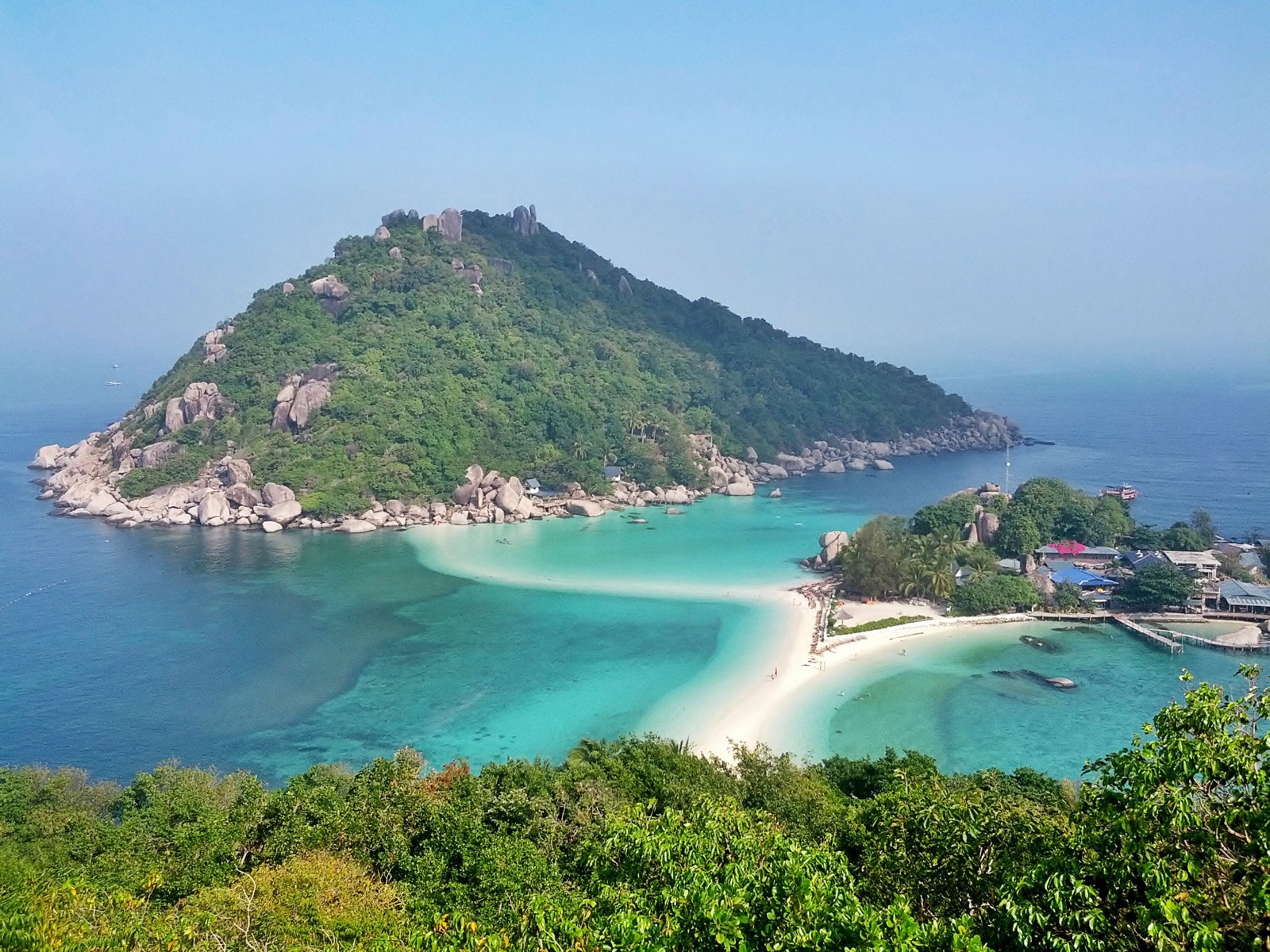 Best for · World-class course affordability, granite pinnacles & whale shark encounters
Koh Tao
ThailandNestled in the Gulf of Thailand, Koh Tao is the world's most famous certification hub. Granite pinnacles rise from 35m depths, surrounded by warm tropical water, whale sharks, and vibrant coral nurseries.
Top dive sites
- Signature offshore granite seamount dropping to 36m; thick schools of chevron barracuda and prime whale shark territory
- Premier Gulf of Thailand dive site 90 mins south; famous 'Chimney' vertical swim-through from 18m to 6m
- Series of 7 submerged granite pinnacles coated in sea anemones, giant groupers, and passing pelagics
- Purpose-sunk 49m US-built WWII landing ship resting upright at 30m; bow and stern cannon mounts at 18–20m
- Sprawling granite boulder garden (8–22m) with blue-spotted stingrays, morays, and Koh Tao's top night dive route
- Ultra-sheltered sand bowl with hard coral gardens (3–14m); world's premier Open Water training nursery
Why Koh Tao Certifies More Divers Than Anywhere Else
Covering just 21 square kilometres in the Gulf of Thailand, Koh Tao is the undisputed global hub for entry-level and continuing dive education.
The island’s economic setup is legendary: an all-inclusive PADI or SSI Open Water course costs approximately £250–£320 (11,000–13,000 THB), frequently including basic fan-room accommodation.
However, Koh Tao is not just a budget classroom for beginners. Its offshore deep granite pinnacles—specifically Chumphon Pinnacle, Southwest Pinnacle, and Sail Rock—rank among Southeast Asia’s most thrilling pelagic aggregation sites.
The Island Geography & Atmosphere Breakdown
To have an exceptional experience on Koh Tao, choosing the right base is critical:
- Sairee Beach: The 1.5-mile bustling west-coast strip. Filled with lively beach bars, fire dancers, and backpacker hostels. If you are 20 and want nightlife every night, stay here. If you value 8 hours of uninterrupted sleep before a 06:00 AM boat departure, avoid Sairee beachfront hotels.
- Mae Haad: The main ferry harbour. Quiet, walkable, filled with authentic family-run Thai restaurants, gear shops, and professional dive centres. An ideal, practical diver base.
- Chalok Baan Kao: The tranquil southern bay. Shallow, chilled-out, and home to eco-conscious dive shops and boutique bungalows.
Boat Logistics & The 06:00 AM Morning Departure
Koh Tao operations run on converted traditional wooden Gulf of Thailand boats:
- The Morning Deep Trip (06:00 AM – 11:30 AM): Operators depart early to reach outer deep sites (Chumphon Pinnacle, Southwest Pinnacle, or HTMS Sattakut) before wind picks up and other boats arrive. These trips are reserved for Advanced divers and Open Water students completing their final deep dives.
- The Afternoon Shallow Trip (12:00 PM – 17:00 PM): Boats head to sheltered, sunlit bays around Koh Nang Yuan (Japanese Gardens, Twins, Mango Bay) for beginner skills, confined water sessions, and refresher dives.
Depth Reality & Site Hazards: The Titan Triggerfish
Koh Tao’s granite boulders provide stunning topography, but divers must understand local nuances:
1. Chumphon Pinnacle & Thermoclines
- Topography: The granite summit sits at 14m, while the seabed drops to 36m.
- Thermoclines: In March through May, cold-water thermoclines surge up from the Gulf depths. Water temperatures can abruptly plummet from 30°C down to 26°C within 2 vertical metres, creating a shimmering visual halocline. Keep an eye on your computer—buoyancy characteristics shift when entering dense cold water layers.
2. Titan Triggerfish (Balistoides viridescens) Territory
- Behavior: During nesting season, territorial Titan Triggerfish aggressively guard their conical nesting zones extending upwards from the seabed in a cone toward the surface.
- Diver Protocol: If a triggerfish approaches with raised dorsal spines, do not swim upwards. Swim horizontally away along the bottom with your fin blades placed defensively between your legs and the fish.
Marine Mega-Fauna: The Whale Shark Window
Koh Tao is world-renowned for wild encounters with the world’s largest fish:
- Whale Sharks (Rhincodon typus): Frequently sighted at Chumphon Pinnacle, Southwest Pinnacle, and Sail Rock. Peak aggregation months occur during the seasonal plankton blooms of March–May and September–October.
- Pelagic Schools: Thousands of chevron barracuda (Sphyraena qenie) form towering circular vortexes over the outer seamounts, accompanied by hunting king mackerel and giant trevally.
Independent Local Dive Centres on Koh Tao
How2Scuba operates with zero booking commissions. Contact these respected operators directly:
- Master Divers (Mae Haad): Highly respected, environmentally focused centre operating small dive groups (max 4 divers per instructor), high safety standards, and personalized service.
- Roctopus Dive (Sairee & Mae Haad): Lively, professional team with exceptional instructor training, modern boats, and a strong culture of dive safety and community.
- Big Blue Diving (Sairee / Chalok): One of the island’s founding dive schools, featuring dedicated technical and freediving departments, on-site beach resort, and spacious custom dive boats.
- New Heaven Dive School (Chalok Baan Kao): The island’s pioneering marine conservation school, offering hands-on reef restoration, coral nursery maintenance, and artificial reef construction courses.
Questions to Ask Before Booking:
- What is the maximum student-to-instructor ratio on course training dives?
- Does the morning boat schedule visit Chumphon Pinnacle or Sail Rock on the days I am diving?
- Are dive computers included in standard equipment rental packages?
Practical Trip Planning: Getting to Koh Tao
- Route 1 (Fastest): Fly from Bangkok (BKK) to Koh Samui (USM) on Bangkok Airways, then take the Lomprayah High-Speed Catamaran (1.5 to 2 hours) directly to Koh Tao’s Mae Haad Pier.
- Route 2 (Budget/Scenic): Book a combined VIP sleeper bus/train + ferry ticket from Bangkok down to Chumphon Pier, followed by a 1.5-hour morning catamaran crossing to Koh Tao.
 Best for · Ultra-affordable Caribbean certifications, seamounts & seasonal whale shark spotting
Utila
Honduras (Bay Islands)The smallest of Honduras' Bay Islands, Utila is a legendary Caribbean budget haven. Dive submerged seamounts like Black Hills, drift down vertical northern drop-offs, and enjoy free accommodation bundled with dive courses.
Top dive sites
- Famous offshore submerged seamount rising from 50m to 10m; swarming with thousands of horse-eye jacks and creole wrasse
- Historic 30m supply ship intentionally sunk in 1998, sitting upright at 30m depth in clear blue water
- Protected marine reserve on the rugged north side featuring vertical walls plunging into hundreds of metres of deep blue
- Utila's deepest vertical wall; sheer drop starting at 20m, coated in deep-water gorgonians and black coral
- Shallow, tranquil southern white sand channels (6–14m) with garden eels, yellow stingrays, and juvenile nurse sharks
- Southwestern coral head system featuring swim-throughs, nurse sharks, and post-dive visits to picturesque local fishing cays
Why Utila is the Western Hemisphere’s Certification Capital
Perched at the southern tip of the Mesoamerican Barrier Reef System (the second-largest barrier reef on Earth), Utila is the Caribbean’s undisputed budget diving paradise.
Measuring just 11 kilometres long, the island is blissfully free from commercial resort chains, traffic jams, and mega-cruises. Transport is conducted entirely on foot, on bicycles, or via three-wheeled motorized tuk-tuks rattling along the single main street of Eastern Harbour.
The Backpacker & Diver Economic Reality:
- Free Accommodation with Dive Courses: Almost every major dive centre in Utila includes free hostel dorm or basic private cabin accommodation with any Open Water or Advanced course. A full PADI or SSI certification costs roughly £280–£350 ($350–$420 USD), making it one of the cheapest places to learn to dive anywhere in the world.
- Cheap Fun Dives: Certified divers can buy multi-dive packages for as little as $30–$35 USD per boat dive, including full equipment hire, boat transport, and professional guiding.
The Diving Geography: South Side vs. North Side Walls
To understand Utila’s diving landscape, consider its two distinct coastlines:
1. The South Shore (Sheltered Gardens & Training Nurseries)
- Topography: The southern coast faces mainland Honduras and is naturally protected from open Atlantic ocean swell. Fringing reefs start in just 5 metres of water, sloping gently down to a clean white-sand seabed at 15–18m.
- Conditions: Zero current, bathtub-warm 29°C water, and crystalline visibility. Sites like Jack Neil Beach and Little Bight are perfect environments for practicing mask clearing, out-of-air drills, and neutral buoyancy.
2. The North Shore (The Deep Oceanic Walls)
- Topography: When northern winds are calm, boats round the island to the rugged northern coastline. Sites like Turtle Harbour and CJ’s Drop-Off feature vertical drop-offs that plunge from 15m directly down into the abyss beyond 1,000 metres.
- Hazards & Discipline: The sheer vertical wall creates an intense feeling of suspension in cobalt blue. Divers must monitor their depth gauges rigorously—dropping from 20m to 35m happens rapidly when you lack a nearby bottom reference.
3. Black Hills: The Signature Seamount
- Located off Utila’s southeast tip, this submerged pinnacle rises from a 50m seabed up to 10m below the surface.
- The Experience: Millions of tiny silversides and thousands of schooling horse-eye jacks (Caranx latus) circle the pinnacle in dense, glittering spheres, attracting hunting barracudas, kingfish, and resident hawksbill turtles.
The Whale Shark Capital of the Caribbean
Utila is widely recognized as one of the few places in the Caribbean with year-round resident whale sharks (Rhincodon typus):
- The Encounter Protocol: Rather than spotting sharks during submerged scuba dives, encounters happen during surface intervals. Dive boat captains scan the open water banks north of the island for “boils”—churning patches of oceanic surface water where skipjack tuna push baitfish to the surface, accompanied by diving seabirds.
- WSORC Regulations: The Whale Shark & Oceanic Research Center (WSORC) enforces strict encounter guidelines: divers slip quietly into the water with mask and snorkel only (no scuba tanks), maintaining a strict minimum distance of 3 metres from the head and 4 metres from the powerful tail fin. Touching the animal is strictly prohibited.
- Peak Months: While sightings happen year-round, peak encounters occur during March–April and August–September.
Independent Local Dive Centres in Utila
How2Scuba operates with 100% commercial independence. Contact these reputable, long-standing operators directly in Eastern Harbour:
- Utila Dive Centre (UDC): A world-renowned PADI Career Development Centre (CDC) with a sprawling waterfront dock, modern custom catamarans, on-site bar/restaurant, and gold-standard instructor development programs.
- Alton’s Dive Center: A relaxed, environmentally focused PADI and SSI resort on the quieter eastern end of the harbour, featuring private overwater hammocks, clean private cabins, and small boat groups.
- Underwater Vision: One of Utila’s oldest family-run dive resorts, featuring a private white-sand beach, volleyball court, friendly local Honduran staff, and affordable beach cabanas.
- Bay Islands College of Diving (BICD): Professional operation located right by the main ferry dock, closely affiliated with the island’s hyperbaric chamber facility and marine research initiatives.
Due Diligence Questions to Ask Before Booking:
- Is accommodation included with fun dive packages or course training?
- How many divers are allocated per in-water divemaster on daily boat trips?
- Does the boat captain actively scout for whale sharks during surface intervals between dives?
- Are dive computers included in standard rental gear or should I bring my own?
Practical Trip Planning: How to Get to Utila
- Via Roatan Airport (RTB): Fly internationally into Roatan (direct flights from Miami, Houston, Atlanta). From Roatan, take the twice-weekly passenger ferry or charter a quick 15-minute hop on an Island Air bush plane directly to Utila’s airstrip (UII).
- Via San Pedro Sula (SAP) & La Ceiba: Fly into mainland Honduras (San Pedro Sula SAP). Take a licensed shuttle or Hedman Alas bus to the port town of La Ceiba (3 hours), then board the modern Utila Dream Ferry for a comfortable 45-minute crossing into Eastern Harbour.