Scuba Diving in Tenerife
Four hours from Europe with year-round subtropical sunshine, Tenerife offers volcanic underwater drama. Explore basalt organ pipe columns, the Tabaiba shipwreck, and sand arenas filled with giant Atlantic stingrays.
Why Tenerife is Europe’s Year-Round Volcanic Diving Hub
Located in the mid-Atlantic off the coast of Western Sahara, Tenerife offers consistent subtropical diving when mainland Europe is frozen.
A direct flight from London, Dublin, Paris, or Frankfurt takes just 4 hours and 15 minutes. With daily high temperatures averaging 21–28°C all year round, divers can escape winter gloom, rent an affordable car, and dive dramatic volcanic drop-offs without crossing multiple time zones.
The Thermal & Environmental Reality:
- Wetsuit Selection is Critical: This is the mid-Atlantic, not the Caribbean. Surface water temperatures drop to 18–19°C from January to April, rising to 23–24°C between August and October. In winter and spring, a 5mm to 7mm semi-dry wetsuit with a hood is mandatory for comfortable 50-minute dives.
- Microclimates: The island is bifurcated by the 3,718-metre Mount Teide volcano. The South (Los Cristianos, Las Galletas, Costa Adeje) enjoys 300+ sunny days a year with calm leeward waters, making it the primary hub for diving. The North and East (Radazul, Tabaiba) feature dramatic deep water close to shore but can experience more cloud cover and localized swell.
Two Distinct Diving Regions: South vs. East Coast
To plan your diving effectively, understand the physical separation between Tenerife’s two main sectors:
1. The South & Southwest (Las Galletas to Los Gigantes)
- Logistics: Primarily dive-boat and fast RIB (rigid inflatable boat) excursions launching from the harbours of Las Galletas, Puerto Colón, and Los Gigantes.
- Topography: Low-profile volcanic reefs, basalt canyons, and wide sandy arenas.
- Signature Site (Los Chuchos / Las Galletas): A protected sand arena at 18–20m where massive round stingrays (Taeniura grabata) measuring up to 1.5 metres across, common stingrays (Dasyatis pastinaca), and butterfly rays hover inches over the seabed.
2. The East Coast (Tabaiba & Radazul)
- Logistics: Walk-in shore diving utilizing harbour concrete steps and purpose-built dive ladders.
- Topography: Sheer volcanic drop-offs plunging into deep Atlantic blue just 50 metres off the shoreline.
- Signature Site (El Peñón / Tabaiba Wreck): A 35-metre tugboat deliberately scuttled in 2006 to create an artificial reef. She sits perfectly upright on pure white sand at 30m depth. The wheelhouse sits at 18m, and divers certified in Advanced Wreck can penetrate the cleared engine room and cargo holds.
Certification Limits & The Tabaiba Wreck Profile
- Open Water Divers (Max 18m): Can dive the upper decks and mast of the Tabaiba Wreck, hover over the wheelhouse, and explore the surrounding shallow basalt reef. Open Water divers must never descend to the seabed at 30m or penetrate enclosed internal compartments.
- Advanced Open Water Divers (Max 30m): Can explore the propeller at 30m, inspect the hull encrusted with sponges, and circle the entire perimeter.
Unique Macaronesian Marine Fauna
The Canary Islands sit at an evolutionary crossroads between temperate Atlantic and tropical African ecosystems:
- Angel Sharks (Squatina squatina): Critically endangered globally, but thriving in Tenerife. Between December and April, female angel sharks migrate into shallow sandy bays (such as Las Galletas and Radazul) to mate and pup. They lie completely buried under the sand with only their golden-flecked eyes protruding.
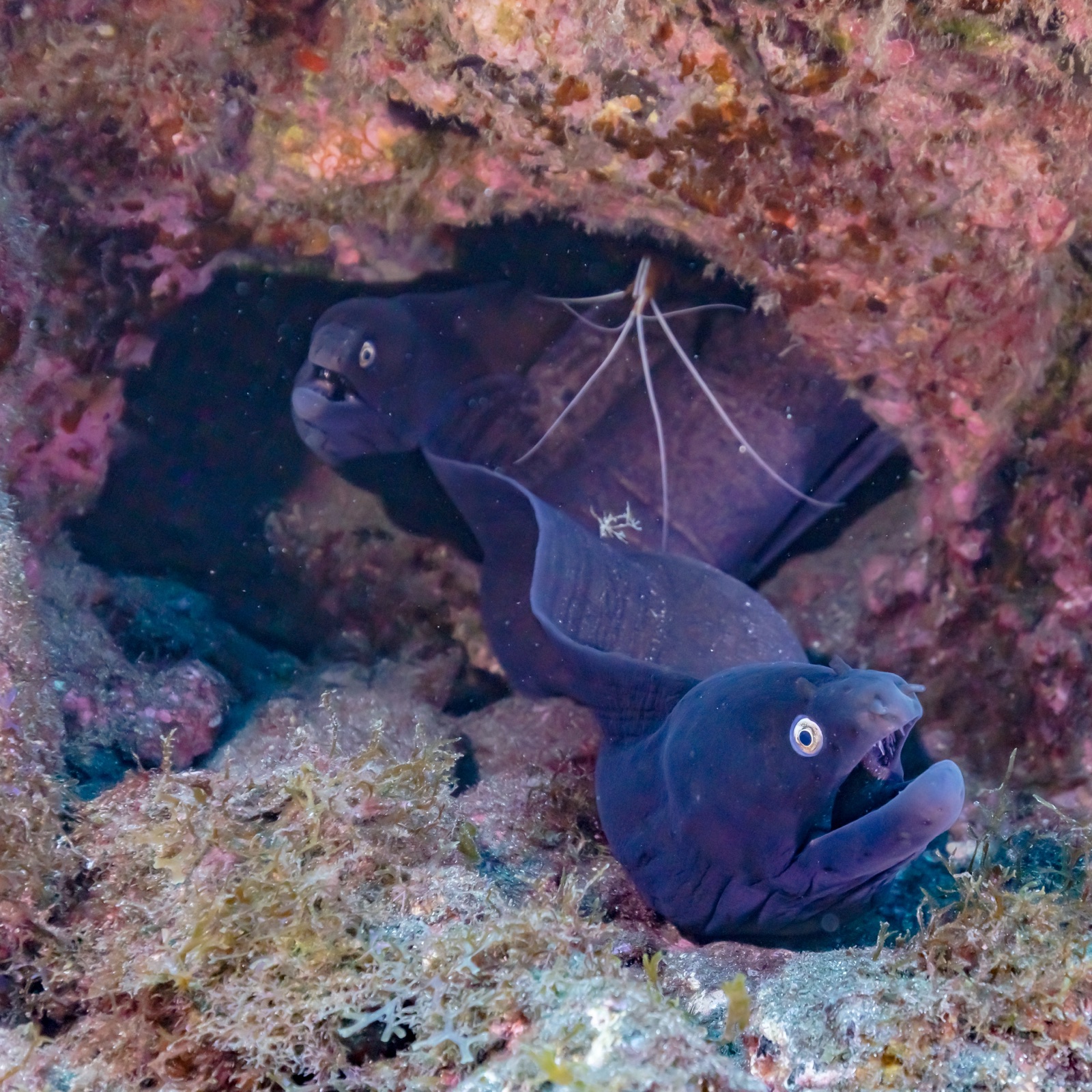
- Black Morays (Muraena augusti): Endemic to Macaronesia, these dark morays with stark white eyes peer out of every volcanic crevice.
- Bastard Grunts / Roncadores (Pomadasys incisus): Huge, shimmering silver shoals of thousands of grunts hover suspended above volcanic basalt pinnacles.
Independent Local Dive Centres in Tenerife
How2Scuba maintains complete commercial independence. Contact these reputable, established operators directly:
- Ocean Dreams Tenerife (Los Cristianos): Friendly, professional PADI centre offering guided boat dives to southern ray sites, quality rental gear, and attentive safety standards.
- Aqua-Marina Dive Centre (Playa de las Am\u00e9ricas / Los Cristianos): One of the longest-running British-managed centres on the island, operating daily morning and afternoon boat dives with experienced local guides.
- Blue Bottom Diving (Costa Adeje): High-end PADI 5-Star IDC facility featuring a private modern boat, hot showers, nitrox blending, and full technical diving setups.
- El Tamboril / Teide Dive (Radazul & Tabaiba): Specialized local shops situated right next to the east-coast shore entries, ideal for divers focusing on the Tabaiba Wreck and deep wall training.
Questions to Ask When Contacting a Tenerife Dive Shop:
- Do your trips launch from a marina boat or are they walk-in shore entries over rocky beaches?
- Do you provide a 5mm/7mm wetsuit plus hooded vest if diving between December and May?
- What is your policy on maximum group size per dive guide?
- Are 15L steel tanks available if I have higher air consumption?
Practical Trip Planning: Getting Around Tenerife
- Car Hire is Essential: While tourist resorts have taxis, renting a car (via local Canary operators Cicar or AutoReisen, which charge ~€15–€25/day with zero excess and zero deposit) allows you to explore both the south and east diving hubs at your own pace.
- Where to Stay: Base yourself in Los Cristianos or Las Galletas for immediate access to dive harbours, quiet pedestrian cafes, and relaxed coastal living.
Authoritative Sources & Maritime Records
Information on depths, marine protection, species, and historical data for Tenerife has been verified against official registries and scientific archives: