Understanding Angel Sharks
The European Angel Shark (Squatina squatina) is one of the most uniquely adapted elasmobranchs in the ocean. Flat-bodied with wing-like pectoral fins, they look remarkably like rays, but are true sharks possessing gills on the sides of their heads and unattached pectoral fins.
They are ambush predators. They bury themselves flat beneath the sand with only their eyes and spiracles visible, waiting motionless for fish, crustaceans, and molluscs to swim overhead before striking with explosive speed.
Where and When to See Them
Angel sharks have vanished from almost all of their historic European range due to bottom-trawling commercial fisheries. Today, the Canary Islands are officially recognized by marine biologists as the last viable sanctuary for the species.
- Lanzarote (Playa Chica): Between November and April, adult and juvenile angel sharks enter the sheltered, shallow sandy bays of Puerto del Carmen to mate and breed. Divers frequently encounter them resting in just 6m to 15m of water right off the beach.
- Tenerife: Also seen along sandy channels and drop-offs around Radazul, Las Galletas, and Los Gigantes.
Diver Etiquette & Conservation Rules
Angel sharks are legally protected in the Canary Islands under Spanish and EU biodiversity law. When diving around them:
- Scan the Sand Carefully: Look for a subtle shark-shaped outline, two small eyes, or breathing spiracles in the sand.
- Never Touch or Harass: Do not poke, grab, or try to uncover them with your fins or fingers. While placid, they possess sharp, needle-like teeth and will snap defensively if physically disturbed.
- Maintain Buoyancy: Stay neutrally buoyant above the bottom to avoid accidentally landing on a buried shark.
- Log Sightings: Divers are encouraged to report sightings (including photos and location) to the Angel Shark Project, a joint international conservation effort protecting the species.
Authoritative Sources & Maritime Records
Information on depths, marine protection, species, and historical data for this topic has been verified against official registries and scientific archives:
Where to dive with Angel Sharks
We've searched our database of destinations. Here are the best places in the world to encounter angel sharks:
 Best for · Best shore and beach dives close to the UK
Lanzarote
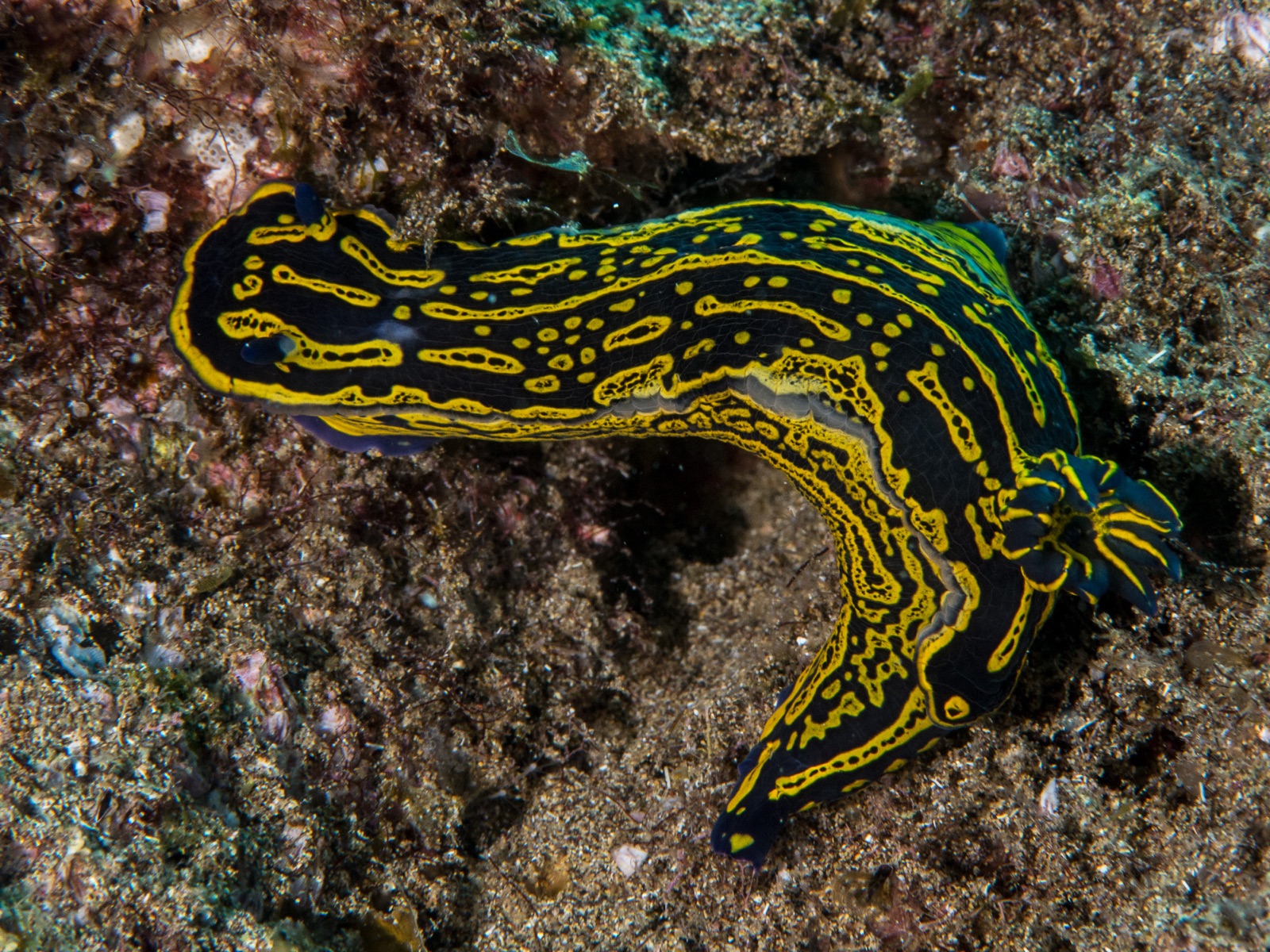
Canary Islands, SpainJust 4 hours from the UK with zero boat charter fees. Playa Chica in Puerto del Carmen offers Europe's finest walk-in beach diving: volcanic tunnels, 30m drop-offs, winter angel sharks, and resident dusky groupers.
Top dive sites
- Shallow, sheltered bay (6–12m), ideal for Open Water, try dives, seahorses and night diving
- Famous volcanic chimney (entrance at 18–20m, exit at 30m). Upper reef open to OW, tunnel requires AOW
- Vast volcanic cavern at 28–30m with giant dusky groupers and glassfish. Requires Advanced
- Europe's only underwater sculpture museum created by artist Jason deCaires Taylor
- Sheltered breakwater bay with massive barracuda schools and winter angel sharks
- Dramatic volcanic drop-off with orange coral caves and resident 40kg groupers
Why Lanzarote Shore Diving Outperforms the UK on Cost & Logistics
For UK and northern European divers, Lanzarote is the undisputed king of affordable, high-quality diving.
In the UK, a weekend of diving often means a 3-hour motorway drive, £90–£120 per day for a hard-boat charter that gets cancelled 50% of the time due to rough swell, £1,000+ invested in a drysuit and undersuits, and fighting through 2–4 metres of murky visibility.
In Lanzarote, you can catch a £50–£120 direct flight from Gatwick, Manchester, Birmingham, Bristol, or Edinburgh on budget carriers (Ryanair, easyJet, Jet2). Within four hours, you touch down in 22°C sunshine, check into an affordable self-catering apartment in Puerto del Carmen, and walk directly into 25-metre volcanic visibility in a 5mm or 7mm wetsuit.
The Big Advantages:
- No Boat Surcharges: Almost all top dive sites in Puerto del Carmen start from the shore. You kit up on the sandy beach or stone jetty steps at Playa Chica and walk right into the water.
- No Drysuit Needed: Winter water temps rarely dip below 18°C, while late summer and autumn reach 23–24°C. A quality 5mm or 7mm semi-dry wetsuit with a hood is all you will ever need.
- Sheltered Bay: Playa Chica is naturally protected by volcanic headlands. Even when open Atlantic swells hit the north or west of the island, Playa Chica is almost always diveable.
The Playa Chica Hub (Puerto del Carmen)
Playa Chica is a small volcanic cove located on the edge of Puerto del Carmen’s Old Town harbour. Despite measuring less than 100 metres across, it is the launching pad for over 10 distinct, world-class dive routes.
As soon as you descend into the bay, you swim over a clean sand bowl (6–10m depth) surrounded by volcanic rock ledges. Proceeding seaward, the bottom shelves off down a sandy slope to 18 metres, where a dramatic cliff line drops away into the Atlantic abyss (dropping past 45m).
Top Dives from the Same Beach:
- Playa Chica Bay & El Muellito (6–12m): The perfect nursery slope. No current, crystal clear, and full of cuttlefish, octopuses, and seahorses along the harbour wall.
- The Blue Hole / Agujero Azul (18–30m+): The iconic volcanic lava tube. The top entry hole starts around 18–20m, cuts downward through the basalt reef, and spits you out onto an open blue wall at 30m depth.
- The Cathedral / La Catedral (28–30m): A vaulted volcanic cave that feels like an underwater temple. Huge dusky groupers (“Felix” and companions) hover calmly inside the cavern.
Certification Limits & Depth Reality: The “Blue Hole” Rule
A critical safety principle that many commercial travel sites ignore is that divers have strict depth limits according to their certification level.
At sites like the Blue Hole (Agujero Azul):
- Open Water Divers (Max 18m): Can comfortably dive out across the shallow bay reef, inspect the sand eel colonies, and swim along the top of the volcanic ridge at 14–18m. However, Open Water divers must not descend into the chimney or drop down the wall. The entrance starts near the 18m line and the bottom of the tunnel is over 30m.
- Advanced Open Water Divers (Max 30m): Are trained and certified to make the descent through the lava tube and exit onto the outer wall at 30m.
- Deep Specialty / Technical Divers: Can explore the deep drop-offs beyond 30m, but recreational divers must maintain strict buoyancy because the seabed below the wall plunges beyond 45m.
Always dive within your certified limits and carry an active dive computer to track your no-decompression limits (NDL).
Marine Life Highlights
Lanzarote sits in a biological transition zone where Mediterranean, Atlantic, and subtropical species meet:
- Angel Sharks (Squatina squatina): Lanzarote is one of the last major global strongholds for the critically endangered European angel shark. From November through April, these flat, ray-like sharks rest camouflaged in the shallow sand at Playa Chica, often in just 8–15m of water.
- Giant Dusky Groupers (Epinephelus marginatus): Highly protected around Playa Chica, massive resident groupers approach divers with gentle curiosity.
- Atlantic Rays: Butterfly rays, common stingrays, and round stingrays frequent the sandy slopes.
- Pelagics: Large shoals of yellowfin barracuda, amberjacks, and Atlantic bonito patrol the drop-off wall.
Independent Local Dive Centres at Playa Chica
How2Scuba has no commercial affiliation with dive centres and does not take booking commissions. When diving in Lanzarote, you can deal directly with well-established local operators who have bases right on or adjacent to Playa Chica:
- Safari Diving: Located directly on the beach at Playa Chica. Tank racks and equipment storage sit right on the sand, meaning you can walk 15 metres from the door straight into the water.
- Manta Diving Lanzarote: Located a 3-minute stroll from Playa Chica, offering guided shore dives, kit hire, and full PADI/SSI training courses with low student-to-instructor ratios.
- Rubicon Diving & Calero Diving: Operating nearby and running both Playa Chica shore dives and boat trips to the underwater sculpture museum (Museo Atlántico).
Questions to Ask When Contacting a Centre:
- Do you supply 12L or 15L steel cylinders (DIN or INT)?
- Do you provide a 5mm/7mm wetsuit plus hooded vest if diving in winter or spring?
- What is the maximum group size per guide on the Blue Hole and Cathedral routes?
- Can I purchase multi-dive packages (e.g., 6 or 10 shore dives) with flexible dates?
Practical Trip Planning
- Where to Stay: Puerto del Carmen Old Town is within walking distance of Playa Chica. You can rent self-catering apartments for £40–£80/night.
- Car Hire: Extremely cheap on Lanzarote (Cicar or AutoReisen often charge €15–€25/day with zero deposit).
- Surface Interval Activities: Explore Timanfaya National Park volcanic fields, visit the César Manrique Foundation, or enjoy fresh seafood in the harbour.
 Best for · Closest trip from the UK
Tenerife
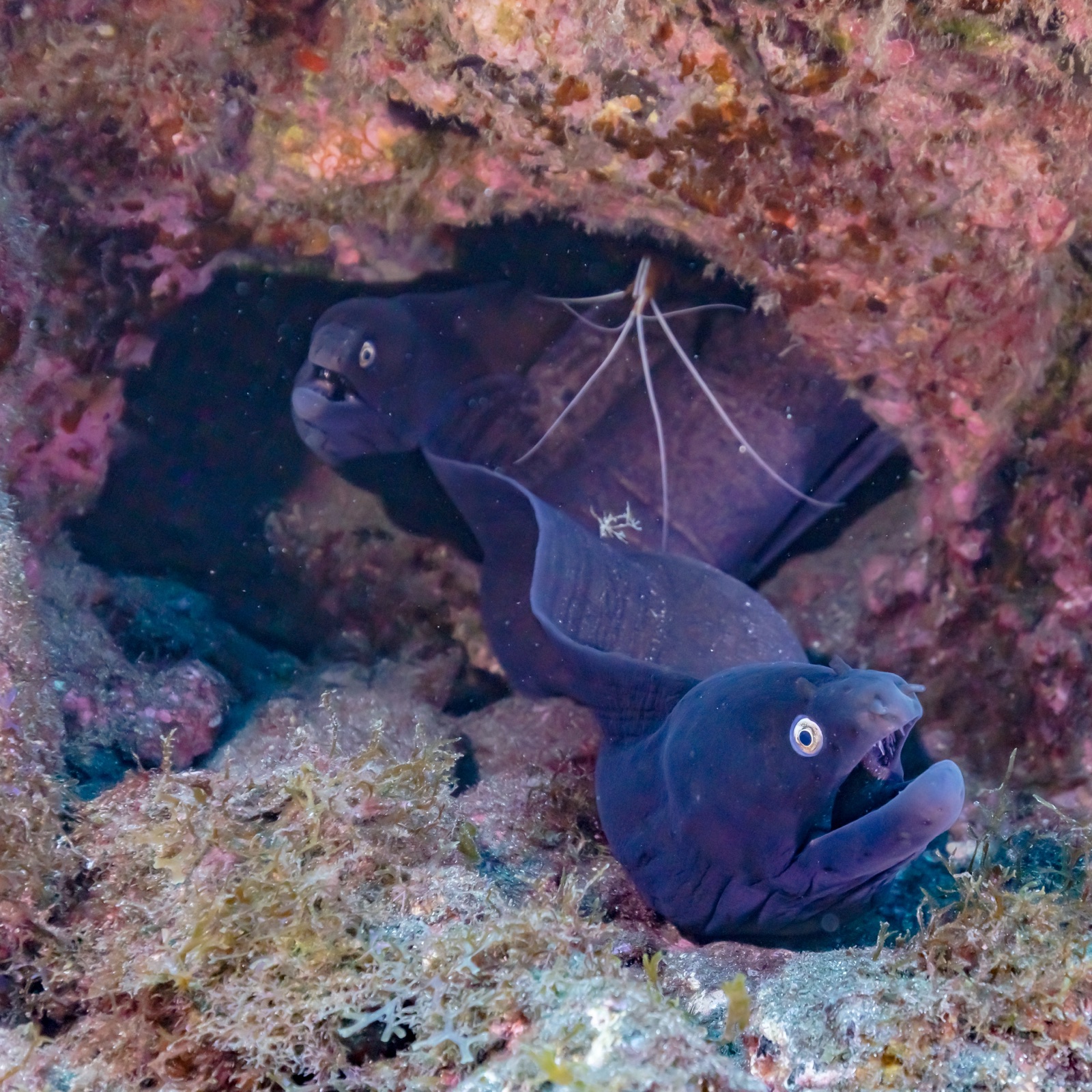
Canary IslandsFour hours from most UK airports with volcanic rock formations, swim-throughs and resident turtles — cooler water than the tropics, so pack a 5mm wetsuit.
Top dive sites
- Shallow bay (8–12m) with resident green turtles and calm waters
- Tugboat wreck sunk at 16–32m. Upper hull open to OW; deeper hull requires AOW
- Volcanic yellow rock formations, swim-throughs, and angel sharks at 14–20m
- Deep drop-off and popular training site with easy shore access (10–35m)
- Basalt column swim-throughs, volcanic arches, and stingray channels
- Natural volcanic amphitheatre with massive common and round stingrays
- Diving beneath 600m cliffs into deep oceanic waters with black coral and dolphins
Why Dive in Tenerife?
Tenerife offers the most dramatic, volcanic underwater topography in Europe. It is the perfect year-round destination for European divers who want warm-ish water and excellent visibility without enduring a long-haul flight.
PADI & SSI Training Routes on Tenerife
Tenerife is ideal for progression due to its protected southern bays and deep coastal drop-offs:
- Open Water Course (Dives 1 & 2 · 6–12m): Conducted at El Puertito or Radazul Marina Shallows, with sheltered waters and sandy floors for confidence-building.
- Open Water Course (Dives 3 & 4 · 12–18m): Completed at Montaña Amarilla or Las Galletas, exploring natural volcanic arches and encountering winter angel sharks.
- Advanced Open Water (Adventure Dives · 18–30m):
- Wreck Dive: Tabaiba Wreck (El Peñón) descending down the mooring line to the wheelhouse at 22m and deck at 28m.
- Deep Dive: Radazul Drop-off or Los Gigantes Cliffs (30m) past black coral bushes.
- Fish ID / Ray Specialty: Los Chuchos observing massive stingray behaviors.
Local Dive Centre Intel & Operations
Tenerife features distinct diving zones between the calm South (Las Galletas/Costa Adeje) and the deep East (Radazul):
- Ocean Dreams Tenerife / Diving Atlantis (Las Galletas): Operating daily RIBs to the Malpaís de Rasca marine reserve.
- Moana Diving / Deep Ocean Diver (Radazul): Specializing in shore-based deep training and Freediving/Tech courses.
- Diving Los Gigantes: The only dedicated center operating directly beneath the 600m cliffs of Los Gigantes.
The Diving Experience
The diving in the Canary Islands is defined by what the volcanoes left behind.
- Topography: You will dive through massive basalt columns, deep lava tubes, and dramatic drop-offs. The architecture of the dive sites is often more impressive than the marine life.
- Conditions: The water here is Atlantic, meaning it is cooler than tropical destinations (ranging from 18°C in winter to 24°C in summer). A 5mm or 7mm wetsuit is mandatory for most of the year.
Marine Life Highlights
While it lacks the colourful soft corals of the tropics, Tenerife has its own unique ecosystem. It is one of the best places in Europe to see Angel Sharks (especially in winter) and massive, graceful butterfly rays. Huge schools of barracuda, stingrays, and octopus are everyday sights.
Tenerife is incredibly diverse. The south is dominated by large tourist resorts and year-round sunshine, while the north is lush, green, and culturally rich. Between dives, you can hike the volcanic landscapes of Mount Teide or enjoy world-class Spanish tapas.